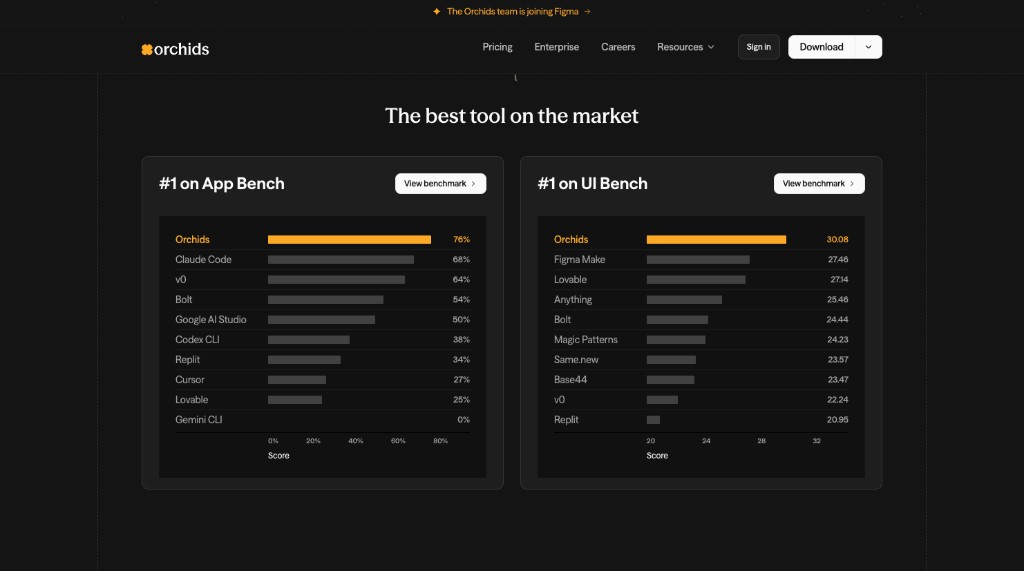
Scoped change. Green tests. Reviewable PR.
No babysitting. No re-explaining. No midnight thrash.
#1 · 76%
#1 · 30.08
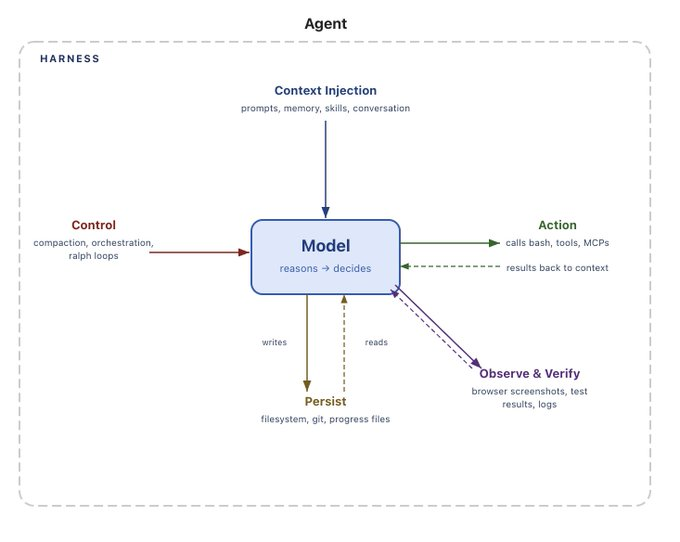
The harness is what makes an LLM useful. On its own, a model is just next-token prediction — really good at producing text.
Predicts the next token. Writes text. Can't touch your repo.
Gives the model hands — so it can actually work in your codebase.
Hands get it into the repo. They don't make it succeed.
"Just buy a smarter model." Fable 5 is 2× Opus — and still blind without a harness.
Harness engineering is designing an environment for the agent — so it has a better success rate when working on a task.
Environment for your agent
A map tells the agent where to look, so it doesn't load the whole repo. Keep context manageable.
Navigate the repo and verify with tests.
Database, language, and engineering decisions.
Skills are playbooks. The agent follows your process instead of inventing one each time.
Scope the change before any edit.
Reproduce, isolate, then fix.
Tests pass. PR ready.
The agent needs a way to know when it's wrong. Wire that into the loop.
Run them. Fail means stop.
Style and safety before merge.
Same checks every push.
When the agent fails, the fix is never "try harder." Find what's missing and put it in the repo.
Stuck or wrong. Don't re-prompt harder.
Missing tool, guardrail, or doc.
Have the agent write it. The harness gets stronger.
A real harness you can clone. AGENTS.md, ARCHITECTURE.md, agent teams.
GitHub github.com/ahmadrosid/nakamaMap for the agent.
Boundaries and data flow.
Clone it. Read the harness.
Your job: scope, map, and rules. The agent's job: execution.
Decide what to build, plan how to build it, then work the plan — with decisions written down in the repo.
What to build. Scope and requirements.
How to build it. Units and files.
Execute the plan. Verify as you go.
Decisions live in the repo, not just in chat. Each doc carries the record forward.
What to build. Scope, actors, acceptance examples.
How to build it. Units, files, test scenarios.
The agent reads the doc — not your last chat — so work picks up where you left off.
New session. Same decisions.
Scan units. Continue the plan.
You can review what was decided and why.
Agents burn tokens on noisy command output and repeated file reads. Shrink both sides of the loop.
Filter git, test, and lint noise before it hits context.
Ask the graph — don't grep the whole repo again.
Both plug into Cursor and Claude Code.
CLI proxy that filters and compresses command output. Single Rust binary. Hooks rewrite bash before the agent sees it.
GitHub github.com/rtk-ai/rtkgit, tests, lint, docker — compact by default.
Auto-rewrite hook for Cursor & Claude Code.
Track token savings per session.
Indexes your repo into a persistent knowledge graph. One structural query replaces dozens of grep/read cycles.
GitHub github.com/DeusData/codebase-memory-mcpBuild the graph once. Query in milliseconds.
Who calls this? What does it call?
vs. file-by-file exploration.
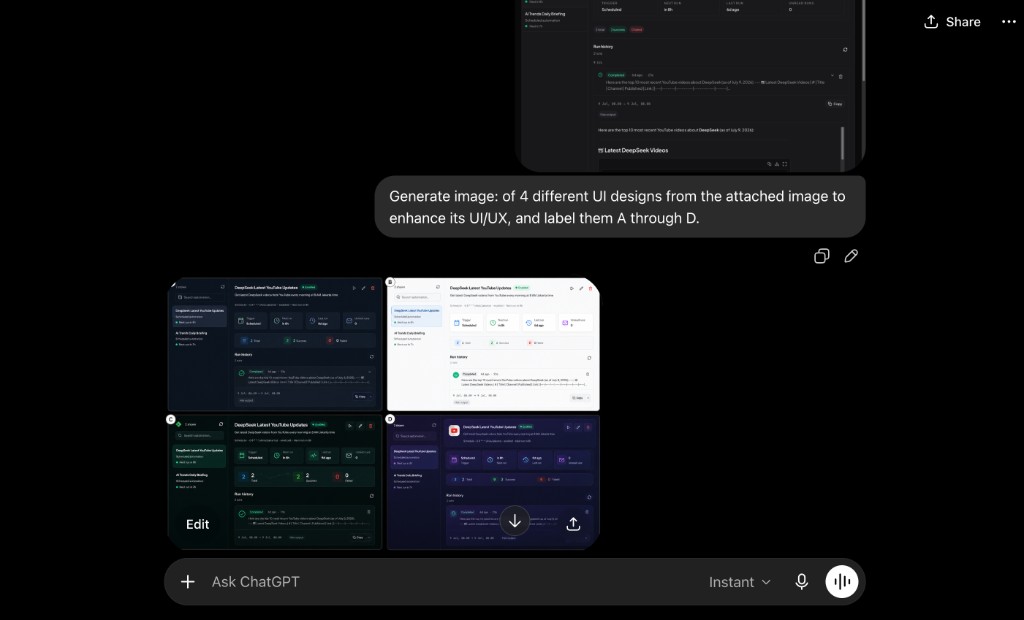
Four mockups in ChatGPT beat one slow coding pass. Pick visually, then implement.
Generate image: of 4 different UI designs from the attached image to enhance its UI/UX, and label them A through D.
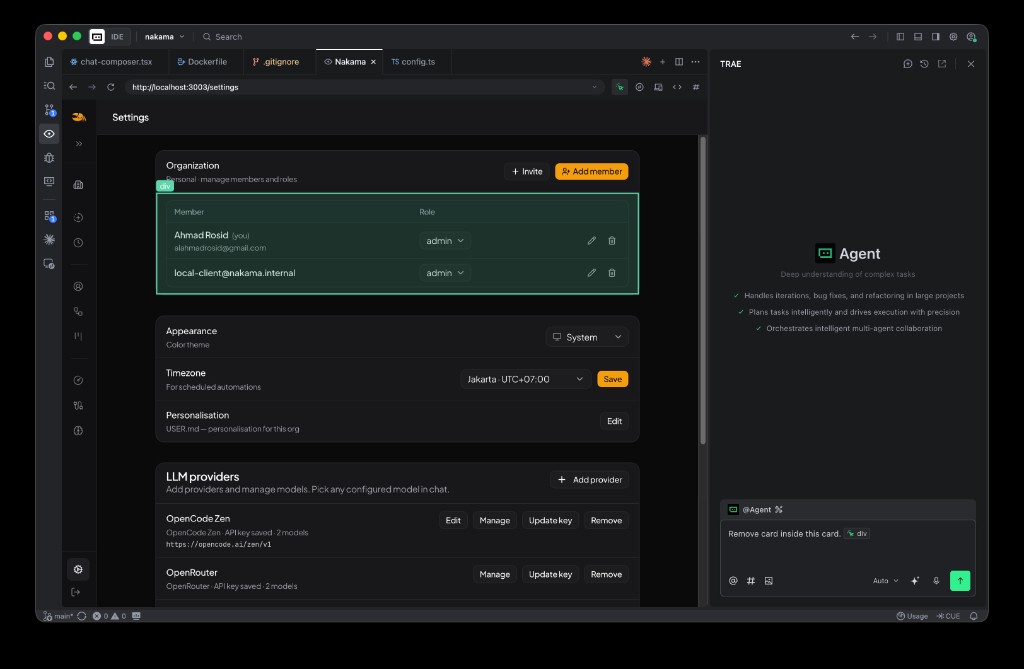
Select an element in Trae. Describe the change — the agent edits in place.
You type all day with AI. When your hands are done, speak your prompts instead.
Free & open source
Paid & polished
Steer the work. Let agents execute. Make the next session smarter.
Questions? · github.com/ahmadrosid